

Fact Checked & Updated by Molly Shaw Wilson MS OTR/L BCP
While weighted blankets offer many benefits, the one most people are looking to achieve is to improve their sleep. Heavy blankets have mostly been used for those individuals with autism or sensory processing disorder, but more and more often they are being used for those individuals with sleeping disorders, like insomnia or restless leg syndrome, as well as people who simply would like to improve their sleep overall.
In this article, we’ll look at some of the studies behind weighted blankets and what they have to offer for those looking to improve their sleep. Mental health professionals are important to consult when starting a new tool or technique, occupational therapists can be helpful in choosing and implementing deep pressure stimulation tools for use at home.
- The Science Behind Weighted Blankets
- Why do Weighted Blankets Improve Sleep?
- How to Choose a Weighted Blanket?
Deep Touch Pressure: The Science Behind Weighted Blankets
When looking at the science behind weighted blankets, you’ll often find the term deep touch pressure, often abbreviated to DTP. This term is often used interchangeably with deep pressure stimulation.
DTP is simply a term for weight being gently and evenly distributed on the body. Most people have felt deep touch pressure in the form of a hug or massage. If you have ever felt calmed down by a hug or have had to hug your child for them to sleep, there is science behind why it works!
Deep Touch Pressure has been shown to raise levels of serotonin in the body. There are actually a few studies backing this up at this point.
Why is releasing serotonin important? It is a chemical that is extremely important for feeling calm, sensory processing, mood regulation, and much more.
Releasing more serotonin along with decreasing activity in the nervous system is a great combination for calming down before bed.
This increase in calming feelings is why weighted blankets help insomnia. Often times, simply having more serotonin can help that.
Why Do Weighted Blankets Improve Sleep Issues
Weighted blankets help improve sleep in a number of ways. As mentioned above, they provide a calming experience by releasing serotonin and decreasing the activity in the nervous system. They deliver a method of deep pressure stimulation to the body that is beneficial to many individuals.
Another reason they help improve sleep is through improving the body’s release of melatonin. Melatonin is a chemical in the body that helps tell us when it’s time for bed. Melatonin release can get altered through unnatural lighting late at night or irregular sleeping schedules.
Weighted blankets help improve melatonin because they help produce serotonin. Serotonin is a key building block for your body to create melatonin, so increasing serotonin will help your body produce melatonin. This then helps your body become on a more regular sleep schedule.
Need more melatonin in your life? Check out Harkla's Sleep Supplements.
The last reason weighted blankets help improve sleep is simply for the fact that they are heavier than regular blankets. By doing this, weighted blankets deliver deep pressure stimulation to the user. This extra weight decreases tossing and turning during the night and can be a great way to deal with restless leg syndrome.
A Study from Journal of Sleep Medicine & Disorders (2015) found that a weighted blanket helped those with insomnia sleep better, simply because it helped them feel more settled before bed.
“Objectively, we found that sleep bout time increased, as well as a decrease in movements of the participants, during weighted blanket use. Subjectively, the participants liked sleeping with the blanket, found it easier to settle down to sleep, and had an improved sleep, where they felt more refreshed in the morning. Overall, we found that when the participants used the weighted blanket, they had a calmer night’s sleep.”
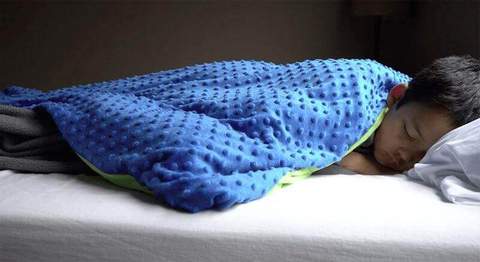
Another study published in the Nordic Journal of Psychiatry measured the use of weighted blankets on children with ADHD. They found that in using this deep pressure stimulation tool for 14 days, study participants saw improvement in the time it took to fall asleep. Teachers of the study participants (children ages 8-13) also noted improvement in activity levels and attention span during the day.
A journal article in the Occupational Therapy and Mental Health looked at safety measures for using weighted blankets in adults. They concluded that using a 30-pound weighted blanket in adults while lying down, was safe (determined by tracking their vital signs). Additionally, they reported effectiveness in lowering electrodermal activity (EDA), lowering feelings of anxiety, and the preference of using the blanket as a calming modality.
How to Choose the Right Weighted Blanket
If you are excited about improving your sleep, then you may be wondering what you need to know about purchasing a weighted blanket.
The first and most important thing is to make sure you get the right weight.
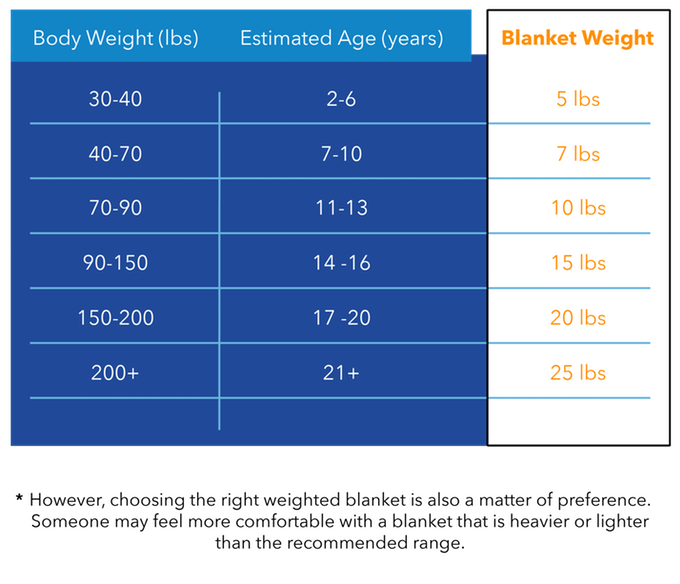
The rule of thumb is 10% of your body weight plus a pound or two. So if you are buying a blanket for an 80lb child, you'd want to go with a 10lb blanket. If you are getting a blanket for a 150lb person, then a 16 or 17lb blanket would work best.
Something you'll want to consider when looking at blankets is what is used to weigh down the blankets. It can vary from plastic pellets to rice to glass beads.
Another important aspect is if you can wash the blanket at home or need to take it to a dry cleaner. If it’s going to get a lot of use, then you should find an easy-to-wash blanket.
The last factor to consider is what type of fabric you’d like, which is a personal preference.
It is important to consult with a mental health professional, like an occupational therapist, to select and oversee the use of a weighted blanket. They can help you understand how to use it properly and evaluate its effectiveness over time.
Conclusion
If you have any questions about weighted blankets, please let us know in the comments! We are happy to respond and help you find the best option for your situation. You can also check out another of our articles here for even more information on the benefits of weighted blankets!


19 Responses
Hi guys, I’m having trouble falling asleep at night if the blanket I’m under gets too hot and sweaty. I’m considering a weighted blanket, but do they breath ok?
Hi Diane,
You may find a weighted blanket beneficial. You can try one of ours and if it doesn’t help, let us know!
For someone who weighs 170 pounds, the recommendation would be approximately a 20 pound blanket. You may also find a 15 pound works well.
Thanks for reaching out!
Nicole
Harkla Happiness Ninja
Leave a Comment