
Your Cart is Empty

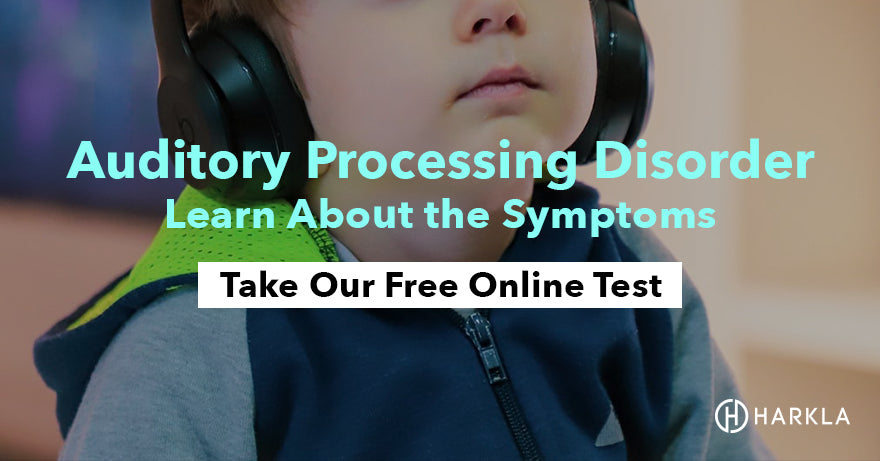
Over the past few years, there has been an increase in awareness and concern for Auditory Processing Disorder (APD) in children. Also known as Central Auditory Processing Disorder (CAPD), it is important to realize the clinical nature of this disorder and some its intricacies, as many of the symptoms can present themselves as a subset of several other more common childhood disorders. It is noted that APD affects about 5% of school-aged children in the United States. Boys are more likely to be diagnosed than girls.
Auditory Processing Disorder itself is a disruption in the brain/body connection – how the central nervous system processes auditory information (sound). Auditory Processing Disorder is not a learning disability or a loss of hearing. It does not involve the comprehension of language.

Children with APD are thought to hear normally, but the breakdown is in how they distinguish the differences in sounds. This difficulty is most noted in a loud complex environment, like a busy classroom, birthday party, sports event, restaurant or cafeteria, or even on the playground.
Often, children with auditory processing difficulties function significantly better in a quiet, controlled environment. The impact of this type of breakdown can have a negative social impact, present as a behavioral challenge, and if left untreated, can even lead to learning delays, struggles with self-esteem and anxiety/depression.
To date, there are no known causes of auditory processing disorder. Medical professionals have linked some cases of APD to illnesses such as chronic ear infections, head injuries, lead poisoning, prematurity, low birth weight, or genetic causes.
There are many other neurodevelopmental disorders that have similar presentations as Auditory Processing Disorder. Attention Deficit Hyperactivity Disorder, Sensory Processing Disorder, Autism Spectrum Disorder, and even some anxiety/depression symptoms may co-exist or mask APD.
It is important to rule out the above developmental disorders and mention health disorders before identifying a true APD. When seeking a diagnosis, it is important to identify other symptoms that may be part of the above neurodevelopmental disorders, and rule such possibilities in or out.
Diagnosis involves a multi-disciplinary team – a psychologist can determine a cognitive profile, a teacher or special education team can determine the academic impact, an occupational therapist can look at auditory sensitivity and other sensory processing challenges, and a speech and language pathologist will assess written/oral speech and language processing.
Only an audiologist can make a true assessment of the disconnect in the central auditory system and properly diagnose APD. Typically, when a child is around age 7 and older, in a sound-proof room, an audiologist will administer a series of tests and measures to identify APD, and then determine the nature and type of APD.
As part of an evaluation for auditory processing disorder, there are 5 areas that an audiologist will assess to determine if a student meets the qualification criteria for APD. They include:
|
Skill Area |
What It Measures |
Example of Difficulty |
|
Auditory Figure-Ground |
Listening in noise |
Trouble following directions in a busy classroom |
|
Auditory Memory |
Recalling spoken information |
Forgetting lists or multi-step directions |
|
Auditory Discrimination |
Hearing small sound differences |
Confusing “sh” vs “ch” or similar word pairs |
|
Auditory Attention |
Maintaining focus while listening |
Drifting off during lectures or oral instructions |
|
Auditory Cohesion |
Higher-level listening skills |
Difficulty making inferences, solving oral word problems, understanding riddles |

If a child meets criteria for APD, treatment is tailored to their specific listening profile. Because the auditory system continues maturing into the mid-teen years, many children improve significantly with the right support.
Common treatment recommendations include:
Targets sound discrimination, auditory memory, comprehension, and listening strategies.
These devices boost the teacher’s voice while reducing classroom background noise. They are one of the most effective supports for school-based listening challenges.
Used at home or in therapy to strengthen specific auditory skills.
Children with APD often qualify for a504 plan that may include:
Preferential seating
FM system use
Written or digital notes
Reduced background noise whenever possible
Access to audio recordings
Visual supports for lessons
Parents play a huge role in shaping an easier listening environment.
Helpful adjustments include:
Choosing a quiet spot for homework
Reducing background electronics
Establishing eye contact before giving instructions
Slowing speech slightly
Breaking directions into smaller steps
Adding rugs or soft furnishings to reduce echo
Using visual schedules, calendars, or reminders
This test is not an official assessment, but more of a tool to help you determine if an official assessment would be useful.


Thanks so much for all this great info. First heard/read about APD from Terri James Bellis, pioneer in this area.
Comments will be approved before showing up.


Maddie
June 30, 2023
What if you’re an adult woman with APD? Is there no hope to get better then?